Karat Vision Technical & Financial Analysis
XRF Testing Speed & Financial Return on Investment
Explore exact technical specifications from the KaratVision K2, K3, and K4 series brochures. Calculate your monthly financial savings, non-destructive recovery gains, and payback period when replacing traditional chemical and fire assays with high-precision XRF spectrometers.
10–15s
Ultra-Fast Assay Speed (K4 FSDD)
0.005g+
Gold Preserved Per Test vs Acid
100%
Non-Destructive & Hallmarking Ready
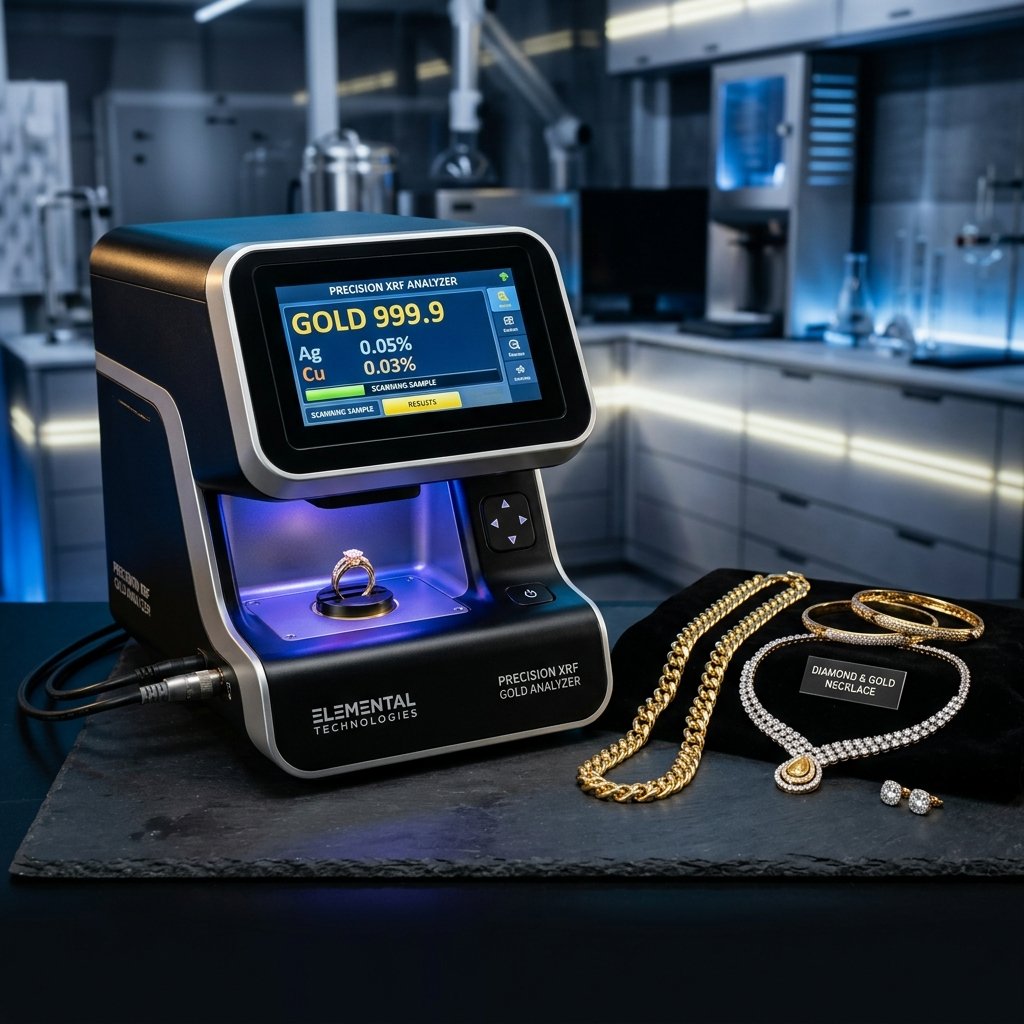
✨ Certified BIS IS 1418 / IS 2112 Accuracy
Interactive Financial ROI & Payback Calculator
Adjust the sliders below based on your daily sample volume and testing costs to calculate your immediate monthly financial savings and instrument payback period.
Testing Volume & Costs
Simulate your business workflow based on 26 working days per month.
Estimated Financial Return
Projected business impact with Fishtro KaratVision XRF
Total Monthly Savings
₹2,68,668
Estimated Payback Period
2.4 Months
Annual Projected Savings
₹32,24,016
Non-Destructive Value Preserved
₹34,668 / Mo
Non-Destructive XRF vs. Traditional Fire Assay & Acid Test
Why leading Indian gold refiners, hallmarking centers, and jewelry manufacturers are replacing destructive fire assays and acid tests with zero-loss KaratVision non-destructive XRF spectrometry.
Traditional / Destructive
Fire Assay (`IS 1418 Cupellation`) & Acid Test
Involves scraping, cutting, drilling, and dissolving physical gold or silver in hazardous boiling acids (Aqua Regia / Nitric Acid) under BIS IS 1418 destructive cupellation procedures.
- Physical Metal Destruction: Consumes 250 mg to 1.0 gram of actual precious metal per test during lead cupellation. In a busy shop testing 50 samples/day, grams of gold (`Au ~19.32 g/cm³`) are turned to slag or lost in acid waste.
- Time Consuming (2 to 4 Hours): Requires lengthy high-temperature melting, cupellation with lead foil, nitric acid parting, and precision analytical balance weighing before results are known.
- Hazardous Fumes & Pollution: Generates highly toxic lead smoke during cupellation and nitrous oxide gases (`NOx`). Requires heavy fume hoods, pollution control board permits, and chemical neutralisation.
- Density & Touchstone Deception Risk: Archimedes specific gravity testing (`water displacement`) completely fails when gold (`19.32 g/cm³`) is adulterated with dense Tungsten (`19.25 g/cm³`) or Iridium (`22.56 g/cm³`). Acid touchstone only scratches the outer 5 microns.
KaratVision Advanced XRF
Zero-Loss Non-Destructive Spectrometry
Direct Energy Dispersive X-Ray Fluorescence (EDXRF) analysis that examines atomic structures without scraping or damaging the jewelry piece.
- 100% Metal Preservation: Not a single milligram of gold, silver, or platinum is damaged or destroyed. Jewelry remains 100% intact, pristine, and ready for immediate showroom sale or hallmarking.
- Instant 10–30 Second Results: Routine analysis completes in seconds. Fast SDD and FSDD detectors deliver full multi-element composition (`Au, Ag, Cu, Zn, Ni, Os, Ir, Ru`) on the spot.
- Clean & Safe Benchtop Operation: Fully enclosed lead-shielded cabinet with double safety interlocks. No hazardous chemicals, zero fume emissions, and no recurring consumables required.
- Penetrates Sub-Surface & Detects Plating: Measures both top gold plating thickness and underlying base metal purity simultaneously in a single rapid exposure.
The Economic Cost of Karat Inaccuracy in Gold Manufacturing
Without exact XRF analytical feedback, jewelry manufacturers lose substantial profit either through "over-karating giveaway" (excess gold in alloy) or "under-karating hallmarking rejection" at BIS centers.
| Production Scenario | Target Purity (22K) | Actual Pour Purity | Daily Financial Impact (on 500g Daily Volume) | Monthly Financial Impact (26 Days) | Operational Consequence |
|---|---|---|---|---|---|
| Over-Karating Giveaway (No XRF Feedback) | 91.66% (22.00K) | 91.85% (22.04K) | -₹13,775 / Day (0.95g Free Gold Given) | -₹3,58,150 / Month Loss | Severe profit erosion. Manufacturer unknowingly gives away nearly 24.7 grams of pure gold every month to stay "safe" above touchstone limits at real ₹1,45,000/10g rates. |
| Under-Karating Rejection (Touchstone Error) | 91.66% (22.00K) | 91.55% (21.97K) | -₹25,000 / Day (Re-melting & Labor Loss) | -₹6,50,000 / Month Loss | Immediate BIS Hallmarking rejection. Entire lot defaced and sent back for re-melting, incurring heavy labor loss, refining fees, and customer order delays. |
| KaratVision XRF Precision Control | 91.66% (22.00K) | 91.67% (22.00K) | +₹13,775 / Day Preserved | +₹3,58,150 / Month Profit Saved | 100% first-pass BIS Hallmarking approval. Zero gold giveaway, exact melt stoichiometry, and maximized profit margins on every single batch. |
XRF Testing Speed & Technology Comparison
Compare routine assay speeds across our K-Series models. Advanced Silicon Drift Detectors (SDD & FSDD) drastically reduce testing cycles while delivering higher energy resolution for minor alloying elements.
K2-Series Silicon PIN Peltier Cooled
45–60 Seconds Routine Assay
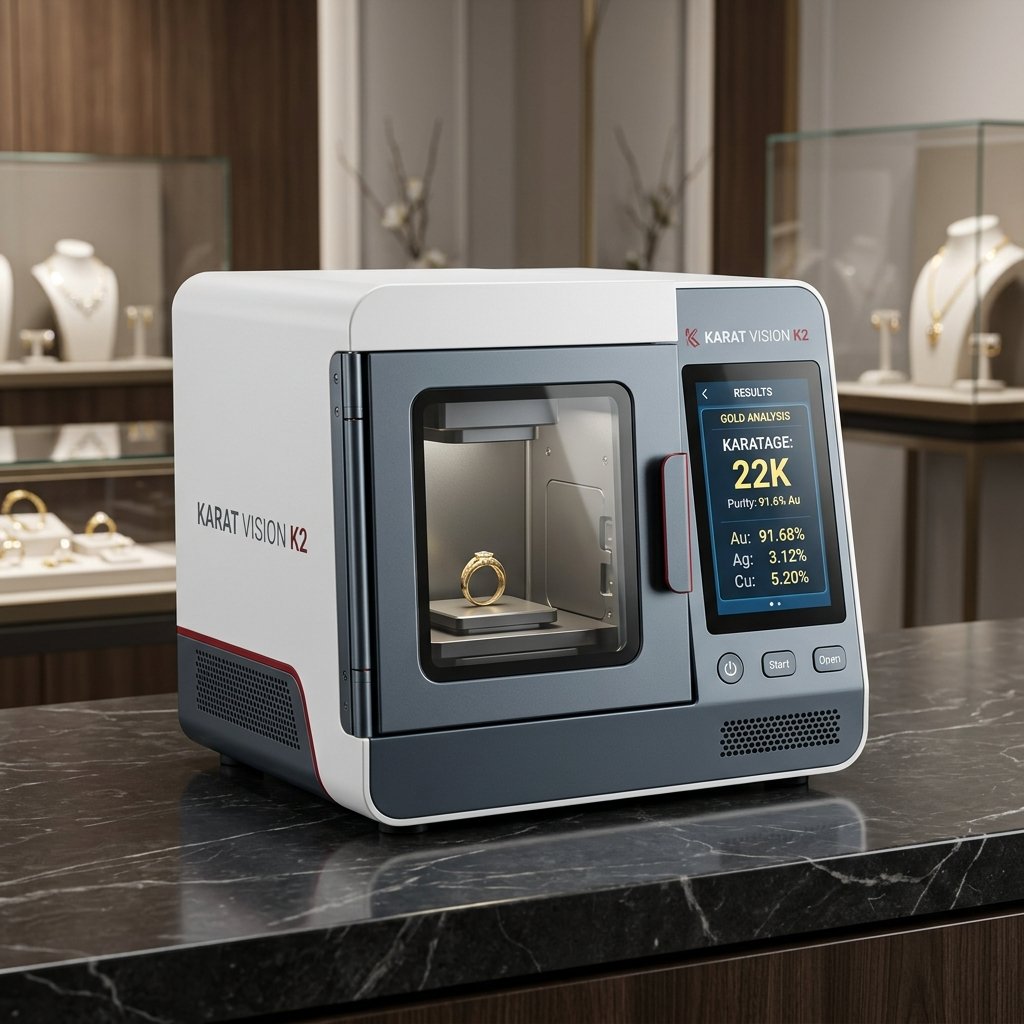
40% Relative Speed
- ✓ Resolution: <160 eV
- ✓ Element Range: Ti (22) to U (92)
- ✓ Target Application: Entry-level jewellery retail shops & standard purity verification
K3-Series Silicon Drift SDD Peltier Cooled
20–30 Seconds Fast Assay
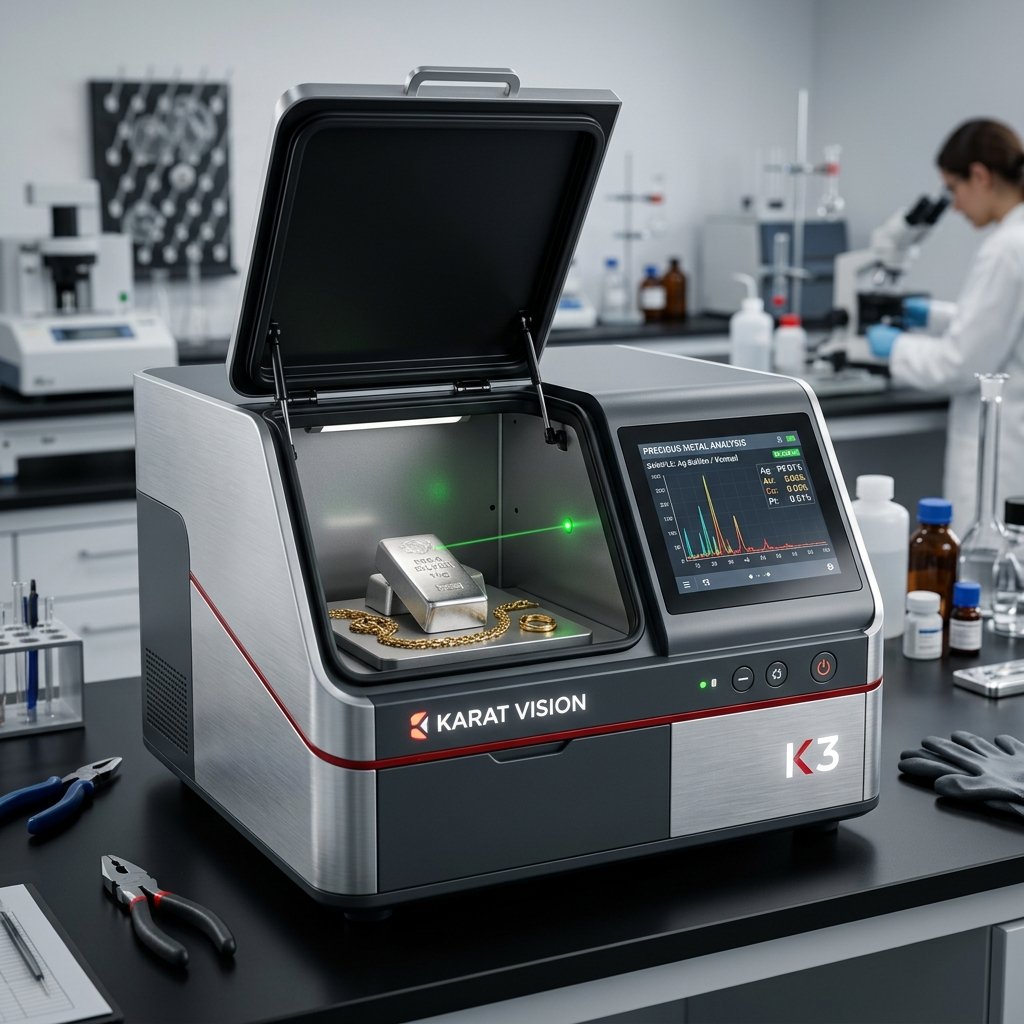
75% Relative Speed
- ✓ Resolution: <145 eV
- ✓ Element Range: S (16) to U (92)
- ✓ Target Application: Karat Certification centers, hallmarking hubs & medium refining operations
K4-Series Silicon Drift FSDD (Fast SDD) Peltier Cooled
10–15 Seconds Ultra-Fast Assay
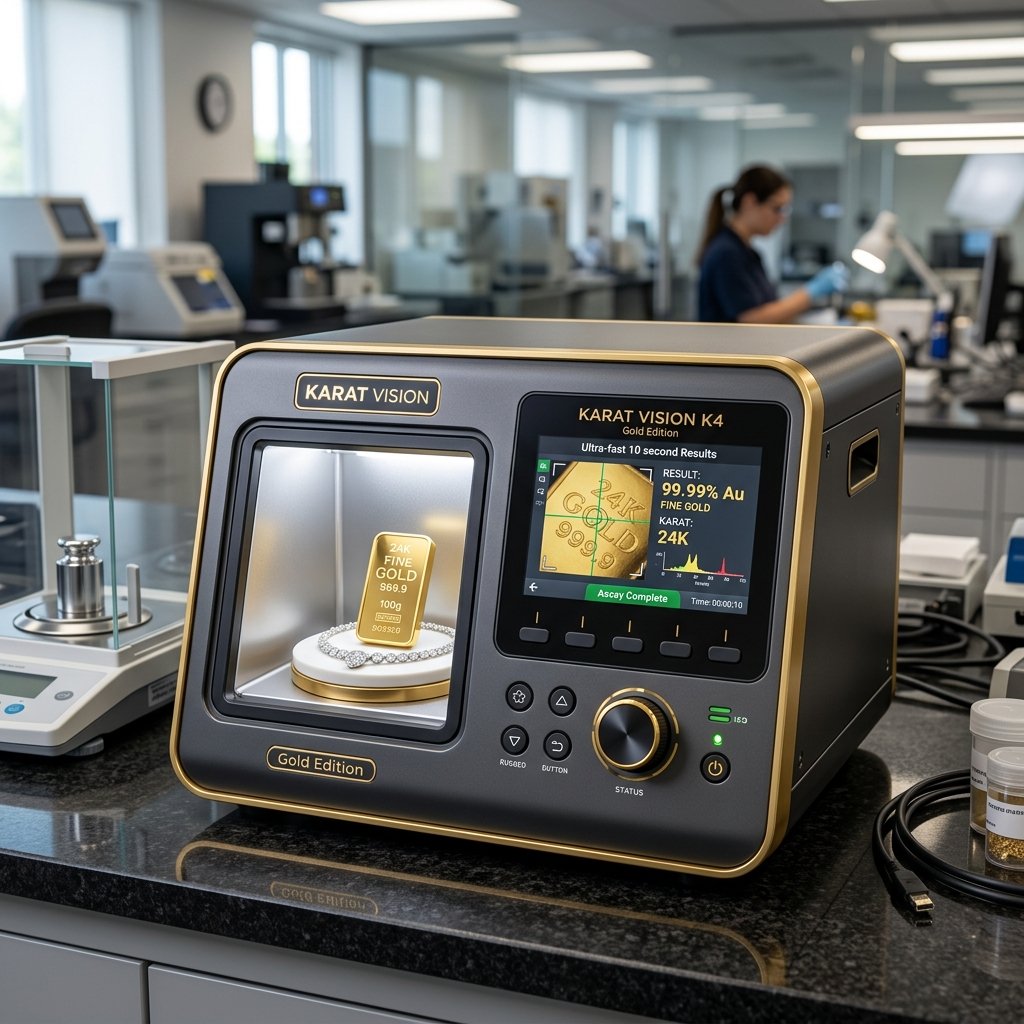
100% Maximum Speed & Precision
- ✓ Resolution: <122 eV (Ultra-low noise)
- ✓ Element Range: S (16) to U (92)
- ✓ Target Application: High-volume refining & melting plants, large assay labs, exact multi-element detection (Os, Ir, Ru, Ni, Pb, Cd)
K5-Series Flagship High-Precision Lab Spectrometer
8–12 Seconds Flagship Speed
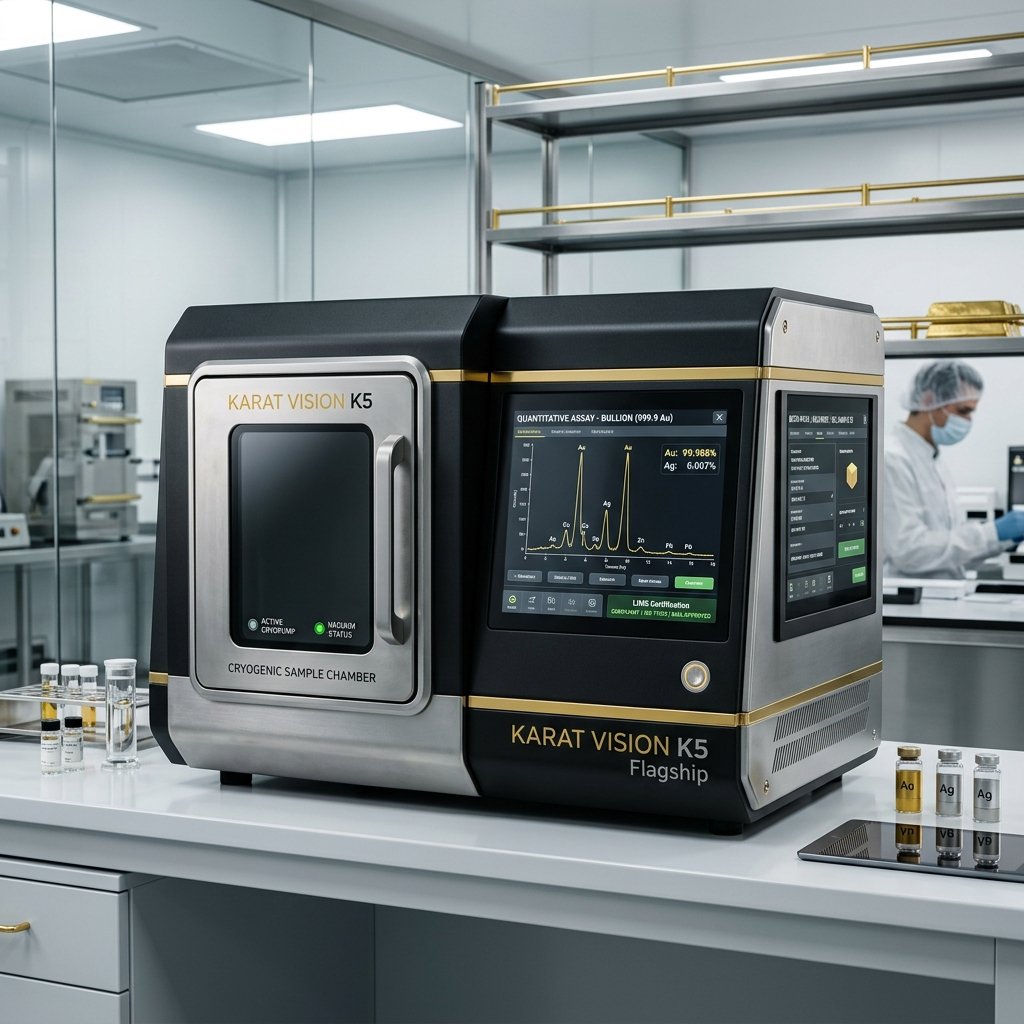
100% Ultimate Speed & Accuracy
- ✓ Resolution: <118 eV (Ultra-low electronic noise FSDD)
- ✓ Element Range: Na (11) to U (92) including trace light elements
- ✓ Target Application: National mints, research institutes, central hallmarking headquarters & high-precision bullion trade
Detection of Hazardous Substances & PGM Adulterants
Protect your brand reputation and prevent financial fraud. KaratVision ultra-high resolution silicon drift detectors isolate overlapping X-ray emission lines to catch hidden, high-density adulterants that specific gravity testing completely misses.
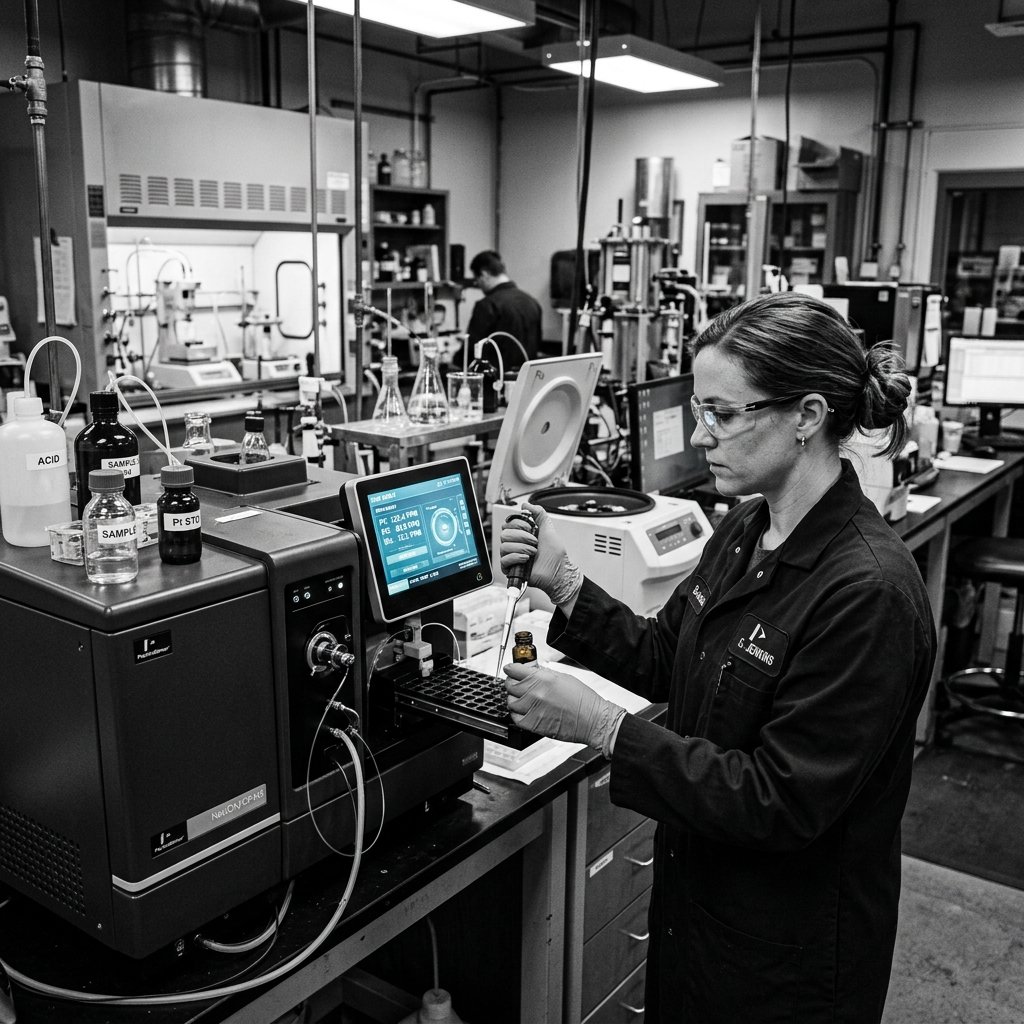
Iridium, Osmium & Ruthenium Contamination
Unscrupulous refiners alloy gold (`~19.32 g/cm³`) with cheaper Platinum Group Metals like Osmium (`~22.59 g/cm³`), Iridium (`~22.56 g/cm³`), and Ruthenium (`~12.37 g/cm³`). Because Osmium and Iridium are denser than pure gold, water touch specific gravity tests fail. KaratVision SDD/FSDD (`<145 eV`) separates Gold L-alpha lines from Iridium/Osmium interference to catch even 0.02% (`200 ppm`) of hidden adulterants.
Tungsten Core & Powder Adulteration
Tungsten (`density ~19.25 g/cm³`) has virtually the exact same specific gravity as pure gold (`~19.32 g/cm³`), making water immersion (`Archimedes principle`) completely blind to tungsten slugs inside counterfeit gold bars and thick chain links. KaratVision's micro-focus tungsten tube coupled with secondary target excitation profiles detects abnormal X-ray absorption ratios, immediately flagging tungsten cores or powder inserts.
Hazardous Allergen Compliance (`REACH & BIS`)
European Union REACH regulations and BIS Hallmarking standards strictly regulate skin-contact jewelry for toxic heavy metals. KaratVision simultaneously screens and quantifies trace concentrations of Lead (`Pb <0.05%`), Cadmium (`Cd <0.01%`), and Nickel release (`Ni`), ensuring 100% legal export compliance and safe jewelry manufacturing.
Advanced Plating & Coating Thickness Measurement
Directly from official KaratVision specifications: measure exact plating thickness in sub-microns alongside underlying substrate composition without scratching or stripping the piece.
Simultaneous Sub-Micron Plating & Core Analysis
Whether verifying gold vermeil over sterling silver (IS 2112) or checking rhodium (`Rh`) flashing on white gold bridal sets, KaratVision's multi-layer fundamental parameter (FP) software decodes X-ray attenuation profiles to output exact micron depth (`0.05 µm to 35 µm`) while simultaneously certifying the base metal alloy.
- Gold Vermeil Certification: Measure top Au thickness over 92.5 Sterling Silver substrate
- Rhodium Flashing Inspection: Verify 0.1–0.5 µm protective Rhodium finish on white gold & platinum
- Triple-Layer Electroplating: Profile complex Au / Ni / Cu multilayer industrial coatings
- Quality Control for Plating Baths: Prevent under-plating customer returns and over-plating gold waste
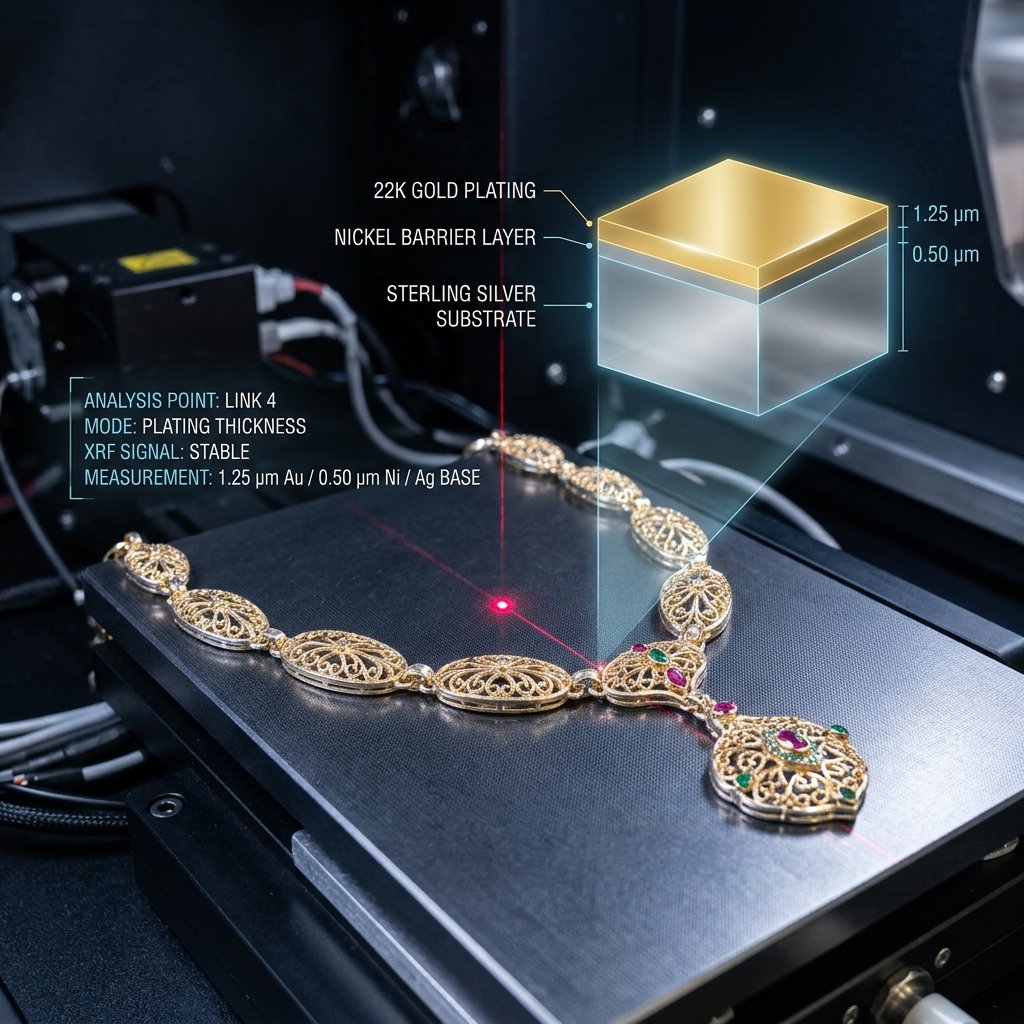
Multi-Layer Plating Profile Resolution
Layer 1: Top Gold Plating (Au 99.9%)
1.25 µm Depth
Layer 2: Nickel Barrier / Diffusion Layer
0.50 µm Depth
Base Substrate: Sterling Silver alloy (Ag 92.5% / Cu 7.5%)
Core Purity Certified
Solution, Powder & Refining Melt Analysis Workflow
From jeweler sweepings (`Kachra`) and pulverized E-waste powder to liquid electroplating baths, KaratVision provides versatile multi-form assaying across your entire refining cycle.
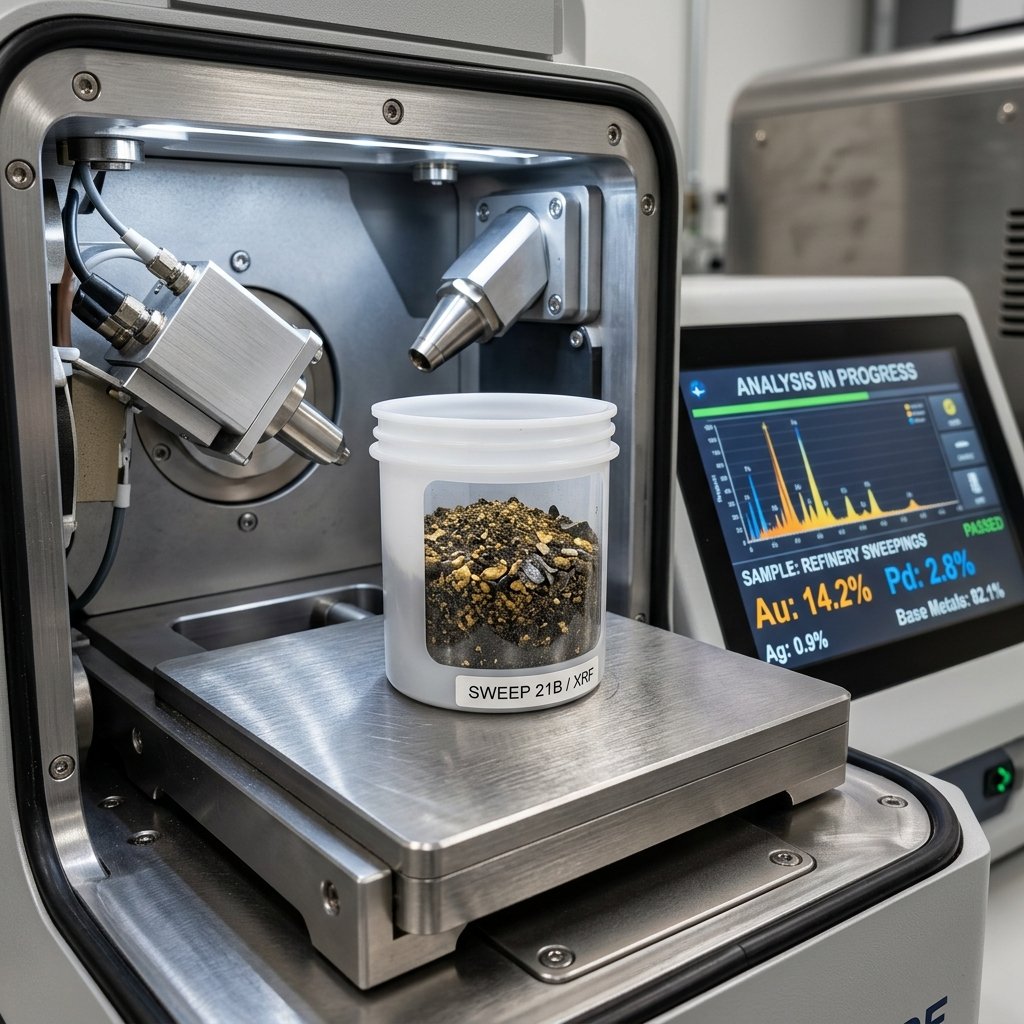
Refining Slag & Sweepings (`Kachra`) Powder
Precious metal refiners can place homogenized workshop dust, polishing sweeps, and pulverized E-waste ash directly into specialized Mylar-window sample cups to quantify gold, silver, and palladium concentrations before initiating chemical extraction.
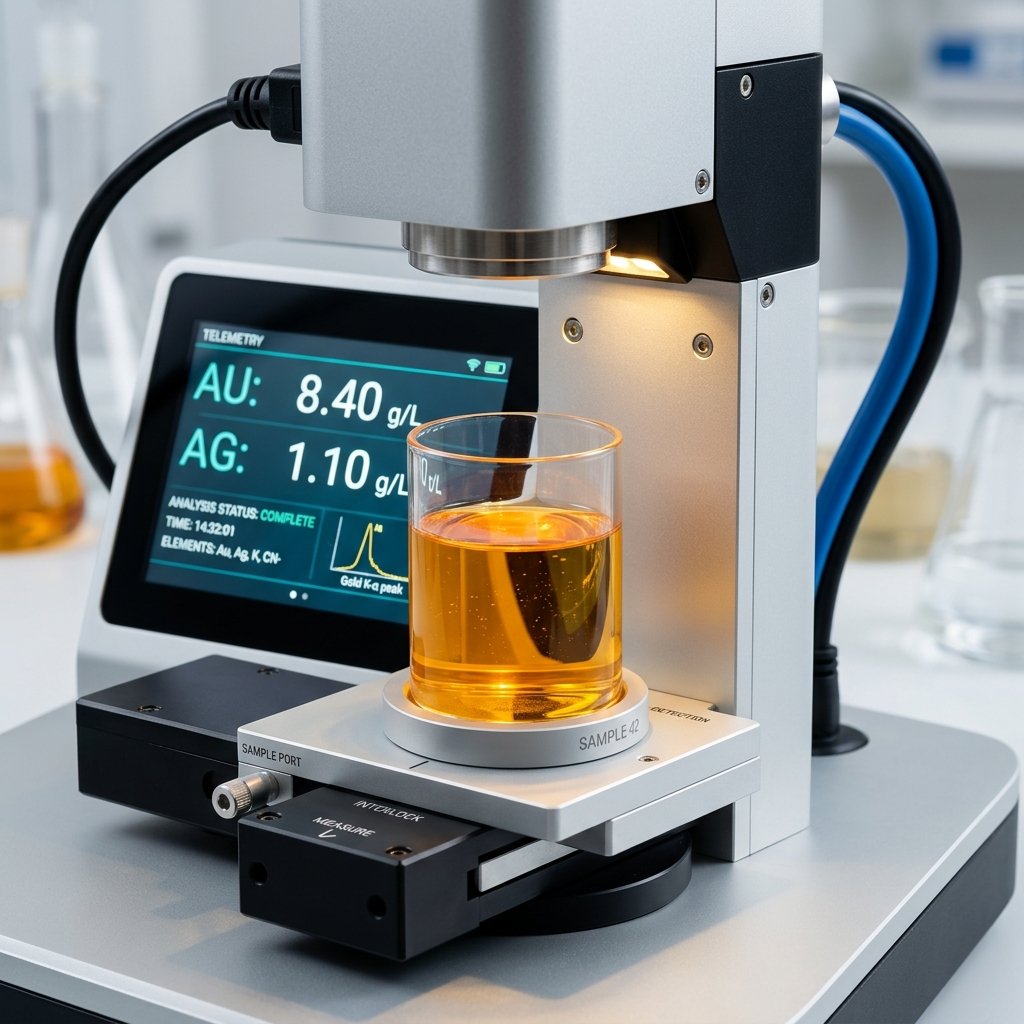
Liquid Electroplating Bath Analysis
Avoid expensive gold bath depletion or over-consumption of Gold Potassium Cyanide (`GPC`) salts. Insert liquid solution cells directly into the sample chamber to monitor exact Au/Ag/Rh concentrations (`g/L`) in real-time electroplating tanks.

20X Optical Zoom Micro-Targeting
Examine intricate filigree, tiny claw settings, or soldered joints without background scatter. The bottom-to-top X-ray beam coupled with a high-resolution 20X optical zoom CCTV camera allows pinpoint alignment on areas as small as 0.5 mm.
KaratVision Technical Specifications Matrix
Direct technical parameter comparison extracted from official Fishtro KaratVision K2, K3, and K4 Series product brochures.
| Technical Parameter | K2-Series (Entry Level) | K3-Series (Fast Assay) | K4-Series (Flagship Ultra-Fast) |
|---|---|---|---|
| Detector Technology | Silicon PIN Peltier Cooled | Silicon Drift SDD Peltier Cooled | Silicon Drift FSDD Peltier Cooled |
| Energy Resolution | <160 eV | <145 eV | <122 eV (Highest Precision) |
| Element Range | Ti (22) to U (92) | S (16) to U (92) | S (16) to U (92) including Os, Ir, Ru |
| X-Ray Tube Specification | Micro-Focus, Tungsten Tube, Be window | Micro-Focus, Tungsten Tube, Be window | Micro-Focus, Tungsten Tube, Be window |
| High Voltage Power | Programmable 50Kv | Programmable 50Kv | Programmable 50Kv |
| Collimator Size | Fixed 1.0 mm | Fixed 1.0 mm or As per requirement | Fixed 1.0 mm or As per requirement |
| Measurement Geometry | Bottom to Top | Bottom to Top | Bottom to Top |
| Dimensions (L × W × H) | 450 × 420 × 310 mm | 450 × 420 × 310 mm | 450 × 420 × 310 mm |
| Optical Chamber Camera | High Resolution CCTV, 20X Zoom | High Resolution CCTV, 20X Zoom | High Resolution CCTV, 20X Zoom |
| Power Supply & Consumption | 110–240V AC, 50/60Hz, 100W | 110–240V AC, 50/60Hz, 100W | 110–240V AC, 50/60Hz, 100W |
| Operating Temperature | 10°C to 40°C | 10°C to 40°C | 10°C to 40°C |
| Approximate Weight | 30 kg | 30 kg | 30 kg |
Technical & Financial Frequently Asked Questions
Common technical questions regarding KaratVision XRF spectrometry, payback timeline, and BIS hallmarking compliance.
What is the difference between PIN (`K2`), SDD (`K3`), and FSDD (`K4`) detector technologies?
Silicon PIN (`Si-PIN`) is our entry-level detector with energy resolution around `<160 eV`, ideal for basic retail purity checks taking 45–60 seconds. Silicon Drift Detectors (`SDD`, `<145 eV`) and Fast SDD (`FSDD`, `<122 eV`) handle up to 10X higher count rates with ultra-low electronic noise, enabling 10–15 second rapid assays and separating complex multi-element overlaps (`like Au vs Ir/Ru`).
How does KaratVision catch hidden Iridium (`Ir`), Osmium (`Os`), or Ruthenium (`Ru`) when touchstone & density testing fails?
Osmium (`~22.59 g/cm³`) and Iridium (`~22.56 g/cm³`) have specific gravities higher than pure gold (`~19.32 g/cm³`), while Ruthenium (`~12.37 g/cm³`) and Tungsten (`~19.25 g/cm³`) mimic or alter density without changing touchstone color. Because water immersion tests fail on these heavy elements, KaratVision's secondary target excitation and ultra-high resolution detector (`<122 eV - <145 eV`) isolate trace X-ray fluorescence peaks down to `200 ppm` (`0.02%`), instantly flagging adulteration without cutting the item.
Can the system measure gold plating thickness over silver (`Vermeil`) or brass without scraping?
Yes. Using our multi-layer Fundamental Parameters (`FP`) algorithm conforming to BIS plating specifications (`IS 2112`), KaratVision penetrates up to 35 microns of top plating to simultaneously output both the exact coating depth (`in sub-microns`) and the precise percentage composition of the underlying core metal.
What maintenance or recurring consumables are required for KaratVision XRF analyzers?
Zero chemical consumables are needed. Unlike fire assays that require lead foil, nitric acid, and cupels, KaratVision operates cleanly on standard `110–240V AC` power (`only 100W consumption`). The Peltier thermoelectric cooling eliminates liquid nitrogen requirements, making maintenance practically zero beyond routine automated software calibration.
Does KaratVision comply with BIS IS 1418 and IS 2112 hallmarking laboratory requirements?
Absolutely. While BIS IS 1418 (`Cupellation / Fire Assay`) remains the official definitive method for gold dispute settlement, KaratVision K3 and K4 Series are specifically engineered to exceed Bureau of Indian Standards (`BIS`) requirements for mandatory, high-precision non-destructive XRF preliminary testing and prohibited element screening across NABL-accredited Assay and Hallmarking Centers (`AHC`) before laser marking, including the latest `IS 2112:2025` (`HUID traceable`) silver specifications.